

The disappearance of the movement
Rio disappeared, never to return.
In apartment 1101 on deck number 5 of Antonio Viera Street, Calder and Lota were discussing Duchamp, modern art and the development of civil society.
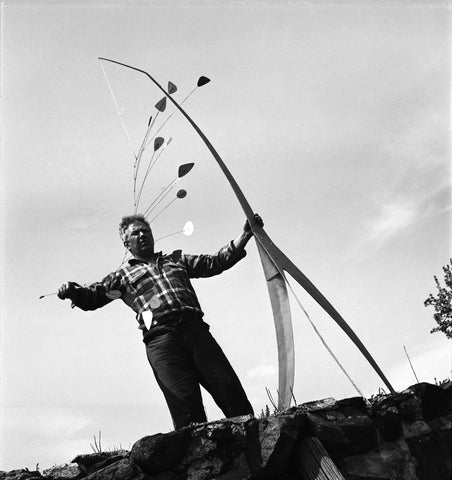
Alexander Calder
She was in love with his art, his way of seeing the world, its lights and shadows. For his part, he admired her strength and perseverance, which had opened so many doors to the world. It was that mutual admiration that invited Lota to dream of having Calder's works in her Flamingo Park and Calder himself to join her inspiration, donating an extra work to soak Rio de Janeiro with abstract surrealism.
"For an engineer to get it good enough is already perfect. With an artist, no such thing happens.
Calder's words echoed in my head as I left the paths of Flamingo Park and recalled the mystery of those missing works.
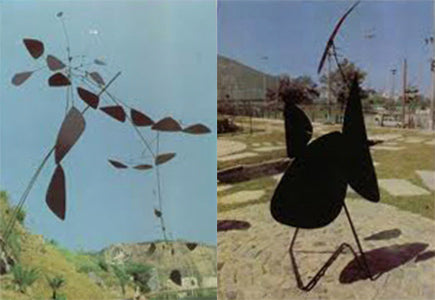
Rio and Stable, the two missing works
In 1961, two of his works landed in Flamingo Park. Thanks to Lota, Rio became the first city in Latin America to have true works of art in open spaces, within everyone's reach. From that moment on, anyone could enjoy the skill of the wind artist and the precursor of kinetics. But the inclemency of the weather never ceased to make its presence felt. In 1984 these works had to be removed for restoration.
The disappearance occurred a year later.
A void would be left in the park, impossible to fill.
Rio, Lota's commission, was movement, shadows, simplicity. Stable, the artist's gift to the city, was elegance and mystery. Both gave Flamingo Park a distinguished, iconic touch that elevated the site and transformed it into a point of modern art and architecture.
Movement was the secret of Calder's art. It was not for nothing that Duchamp catalogued his works as "mobile". That very movement was the key to this mystery, the confirmation that surrealism had no limits; that spectacle was the artistic structure that Calder wanted in his work and that Lota wanted to add to his most ambitious project.
Today it no longer matters where these works are located, if they still exist. What is important is to recognize the impact they left on the history of the city. Colors, shapes and movement had been everything. Rescuing those concepts, transforming them and turning them into linen, velvet, porcelain? that's what it's all about.